


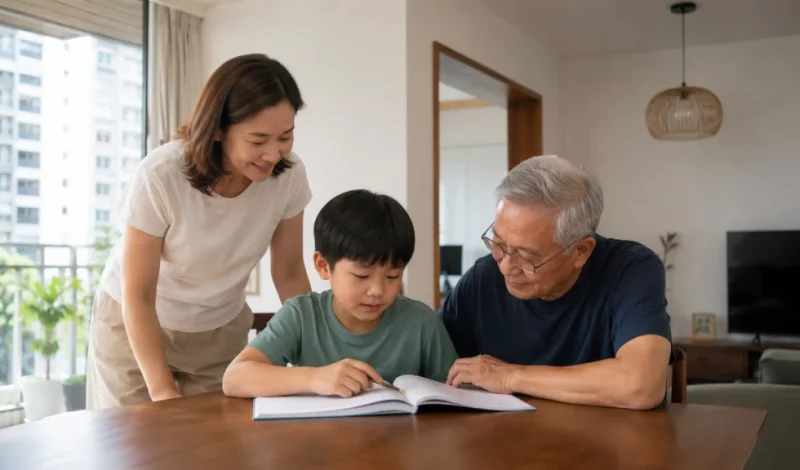
Grandparents can be an important source of stability after a divorce, especially where they helped with childcare before the separation. The issue is whether grandparents have contact rights, and how their involvement fits with child custody and care and control, access arrangements, and the child’s daily routine. In Singapore, the focus is not simply what the adults want, but what arrangement best supports the child’s welfare.[1] Helpful records may include the child’s routine, school pick-ups, handover messages, caregiving history, medical help, holiday care, and any incidents affecting safety or conflict.
Quick Answer
Grandparents do not automatically have the same right to spend time with the child as a parent after a Singapore divorce. Their involvement may still be relevant if it benefits the child, reflects an existing caregiving relationship, preserves a familiar routine, or helps make parental access workable. The outcome depends on welfare, past involvement, safety concerns, and the parents’ arrangements.
Key Takeaways
- The case for grandparent contact is strongest when it supports the child’s welfare.
- A history of real caregiving is more persuasive than a general wish to remain involved.
- Grandparents are usually not given custody unless the facts show that the parents are unable or unsuitable to care for the child.
- Grandparents may help with access, but they should not take over the parent’s role during access.
- Safety, conflict and routines can affect contact.
Where Grandparents Come In After Divorce
After a divorce, the main child-related orders usually concern the parents. Custody deals with major decisions such as education, religion, healthcare and other long-term welfare issues.[2] Care and control is about which parent has day-to-day responsibility for the child. Access concerns the time the other parent spends with the child.
Grandparents usually become relevant because of the practical support they give around these arrangements. A grandparent may help with school transport, meals, homework, childcare during work hours, or handovers. While this support can be important, it does not automatically give the grandparent decision-making authority.
The court’s focus is the child’s welfare. The question is not simply whether a grandparent is loving, upset, or financially generous. The more useful question is whether contact with grandparents provides stability, continuity, emotional security and a safe relationship for the child.
Where the facts show that the parents are unable or unsuitable to care for the child, the grandparents’ role may become more significant.[3] This would be treated differently from the ordinary divorce where both parents remain available and suitable caregivers.
Why Grandparent Contact Can Affect Divorce Outcomes
Grandparent contact can affect practical arrangements after divorce. It may influence weekday care, weekend access, transport, school holidays, birthday arrangements, overseas travel, emergency care, and childcare costs.
For example, a parent’s access may realistically depend on the grandparents’ childcare support while that parent works. Sometimes, one parent may accept grandparent contact but object to the grandparents’ criticism of parenting methods or bypassing agreed communication channels.
These issues can influence negotiations in the Singapore divorce process. They may also affect how parties discuss practical child-related expenses if grandparents are helping with caregiving or payments. Financial help, however, does not give a grandparent control over the child’s upbringing.
A stable relationship with grandparents can support a child after divorce. If grandparent involvement increases conflict between the adults, the arrangement may need clearer boundaries, especially where the child is affected.
What Matters in Court, Mediation and Records
The strongest position is usually practical, child-centred and specific. It is more persuasive to show how the grandparent has helped the child than to argue that grandparents deserve contact as a matter of fairness.
Relevant factors may include the child’s age, emotional bond, past caregiving, frequency of contact, the child’s routine, the child’s wishes where appropriate, and whether the proposed contact supports or disrupts parental access. Safety concerns, family violence allegations, or a personal protection order (PPO) in Singapore may also change the analysis.[4]
Practical Insight
Credibility is strengthened by consistent records showing calm, child-centred involvement. A common risk is using the child as a messenger between adults. Keep communication polite, factual and between adults.
Practical Insight
A proposal is stronger when it states dates, times, transport, supervision and review points. The risk is asking for vague “free access” without explaining how it will work. Propose a manageable routine that can be reviewed after it starts.
Keep records showing the child’s actual routine. Useful material may include calendars, messages about pick-ups, school arrangements, tuition, meals, medical appointments, holiday care, overnight stays, and birthday arrangements.
Common mistakes that backfire
- Using grandparent involvement to pressure the other parent.
- Turning every access session into an extended family dispute.
- Making serious allegations without dates, details or records.
- Refusing all grandparent contact without child-centred reasons.
- Letting grandparents criticise the other parent in front of the child.
Options and Pathways in Singapore
Start by identifying the real dispute. Is the issue no contact, too much involvement, unsafe conduct, disrespectful communication, interference with parenting, or uncertainty over who manages access? Each problem needs a different response.
Next, stabilise the child’s routine. Even where adults disagree, the child should not be placed in the middle of conflicting family expectations. A short-term arrangement can sometimes reduce conflict while parties work through longer-term child arrangements.
Prepare a timeline of the grandparents’ involvement, the child’s current schedule, and specific incidents causing concern. Avoid making broad emotional statements without dates, examples or supporting records.
Constructive routes may include direct discussion, lawyer-assisted negotiation, mediation, parenting coordination, or a more detailed parenting plan. If the dispute becomes serious, court-managed steps may be needed, especially if contact is being blocked without valid reasons, existing orders are ignored, or there are safety concerns.[5]
Expert input from a counsellor, psychologist or psychiatrist is not required in every case. It may, however, be relevant if there are serious concerns about emotional harm, estrangement, trauma, developmental needs, or whether a proposed arrangement is suitable for the child.
Practical Next Steps
- Record the child’s routine and who provides daily care.
- Save messages about handovers, childcare, transport and contact.
- Avoid using the child to request or reject contact.
- Prepare a timeline of caregiving and key incidents.
- Bring court orders, parenting plans and relevant messages when consulting a Singapore divorce lawyer.
Misconceptions and Traps
“Grandparents always have a legal right to see grandchildren.”
They do not automatically have parental rights, although their involvement may matter if it supports the child’s welfare.
“A parent can block all grandparent contact after divorce.”
A parent may raise genuine concerns, but a blanket refusal can be questioned if it harms a stable and beneficial relationship with the child.
“Grandparent contact is the same as parental access.”
It is not the same, although grandparents may sometimes assist during a parent’s access time.
“A grandparent who provides childcare should get custody.”
Childcare support may be relevant, but custody for grandparents is usually considered only where the facts show that the parents are unable or unsuitable to care for the child.
“The wealthier household should get the child.”
Money is not the deciding factor. The child’s welfare includes material needs, but also stability, security, attachment, guidance and emotional care.
Frequently Asked Questions
Do grandparents have legal rights to see grandchildren after divorce?
Grandparents do not automatically have the same rights as parents. Their involvement may still be relevant if contact benefits the child and is consistent with the child’s welfare, routine and safety.
What if one parent blocks grandparents from seeing the child?
First identify why contact is being blocked. If the refusal is not based on welfare or safety concerns, the issue may be raised in negotiation, mediation, or where appropriate, court-managed child arrangements.
Can my spouse stop my parents from helping during access?
It depends on the orders and the child’s welfare. If your parents help with transport or care, the arrangement should be transparent, safe and consistent with the agreed or ordered access terms.
Will the court give custody to grandparents instead of parents?
This is not the usual outcome. While a grandparent’s caregiving role may matter, parents generally remain the primary caregivers unless the facts show that another arrangement better serves the child’s welfare.
How can I show that grandparent contact is beneficial for my child?
Focus on records showing consistency, care and stability. Useful examples include regular childcare, smooth handovers, school transport, positive routines, and conduct that does not undermine the other parent.
Grandparent involvement can be relevant after divorce if it supports the child’s welfare and preserves a stable caregiving relationship. However, grandparent involvement may need clearer boundaries if it repeatedly causes adult conflict or contradicts court orders.
Early advice can help identify the real issue, assess any welfare concerns, and shape a practical proposal that supports the child’s welfare.
This information is general and does not constitute legal advice. If you are unsure what steps to take next, it may help to get advice tailored to your situation from an experienced divorce lawyer in Singapore. Contact me at 8039 9083 for a consultation.
References
- Singapore Statutes Online. (n.d.). Women’s Charter 1961, section 125: Paramount consideration to be welfare of child. Attorney-General’s Chambers. https://sso.agc.gov.sg/Act/WC1961?ProvIds=pr125-
- Singapore Courts. (2025, July 17). In a divorce, what is child custody and how will it be determined? Ask.gov.sg. https://ask.gov.sg/sgcourts/questions/clywqg7ta0051q97hxr1fl0o1
- Singapore Courts. (n.d.). Guardianship. Judiciary.gov.sg. https://www.judiciary.gov.sg/family/guardianship
- Singapore Courts. (2025, January 2). Understand the outcomes of a personal protection order application. Judiciary.gov.sg. https://www.judiciary.gov.sg/family/understand-outcomes-personal-protection-order-application
- Singapore Courts. (2025, January 2). File an application to enforce a child access order. Judiciary.gov.sg. https://www.judiciary.gov.sg/family/divorce/file-an-application-to-enforce-a-child-access-order
If you need help with legal matters
Have a question or need more information? Just drop us a line!

