



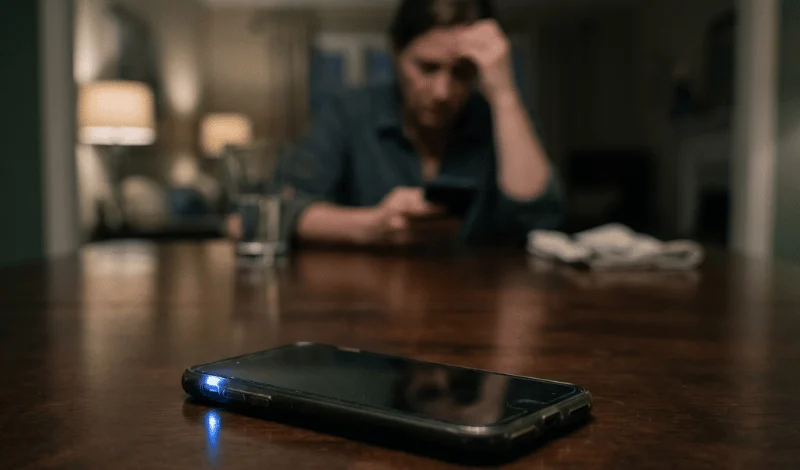
Digital harassment between spouses can take many forms, including abusive messages, repeated late-night calls, fake accounts, tracking, threats, online humiliation, or pressure through email, WhatsApp, and social media. During a marriage breakdown, digital harassment may affect safety, communication about children, finances, or daily life, and may also become relevant to legal action in Singapore. What matters is the spouse’s behaviour, how often it happened, and the effect it had. Screenshots, full message threads, call logs, posts, account activity, police reports, and records of what happened afterwards may be good evidence to keep.[4]
Quick Answer
Digital harassment between spouses may justify legal action in Singapore where the conduct goes beyond ordinary marital conflict and involves threats, intimidation, stalking, repeated online abuse, or misuse of accounts or private information.[1] Depending on the conduct, it may fall within harassment law, and where it forms part of family violence, may also be relevant to a PPO. In some cases, a police report may also be appropriate.
Key Takeaways
- Digital harassment may matter even without physical violence.
- Digital harassment can affect divorce and parenting disputes.
- Full message threads are usually better than selected screenshots.
- Repeated conduct usually matters more than one bad exchange.
- Poor responses can damage credibility.
- Gathering evidence early can help build the case.
Where This Sits Under Singapore Law
Digital harassment is not a formal legal term, but the conduct may still be legally relevant in family matters. Between spouses, the same online behaviour may raise different issues depending on what happened. It may involve harassment, stalking, threats, misuse of accounts, disclosure of private material, or attempts to control the other spouse through digital means.
If the complaint is mainly about online harassment, stalking, or distress caused through messages or online conduct, it may fall within the Protection from Harassment framework. If the conduct is by a family member and forms part of family violence, it may also be relevant to a personal protection order (PPO) in Singapore.[2]
Not every unpleasant message will justify legal action. What usually matters is whether the conduct was repeated or serious, whether it caused fear, distress, pressure, or control, and whether protection is actually needed.
Why It Matters in Divorce Outcomes
Digital harassment can affect communication between spouses, negotiations, and decisions about children, disclosure, and finances.
Sometimes the conduct is plainly controlling. A spouse may monitor devices, demand passwords, send abusive messages after receiving a lawyer’s letter, or threaten to release private material unless the other side gives in. In other cases, the conduct may be less intense but still serious, such as incessant messaging, impersonation, public shaming, or using the child to continue the conflict.
It may also become relevant to child custody and care and control. A parent who repeatedly sends hostile messages, uses the child as a messenger, or creates constant conflict around school or access may weaken their position on practical co-parenting. Usually, a repeated pattern carries more weight than one isolated incident.
Financial issues may overlap as well. Digital harassment may involve pressure over joint bank accounts, threats about disclosure, or attempts to force a quick settlement.
What Matters in Court, Mediation, and Negotiations
Courts and mediators will usually look at the conduct itself, the pattern, and the reliability of the evidence. A single rude message may carry limited weight compared to a sustained pattern of harassment supported by dates, full message threads, account records, and a clear timeline of events.
Having a consistent narrative is important. For example, if a spouse alleges daily threats over several months but produces only two isolated messages showing threats, that may weaken the complaint. On the other hand, a spouse who properly preserves the records, avoids exaggeration, and can explain what happened before and after each incident will usually present a stronger account.
Practical Insight: Full message threads are usually more persuasive than cropped screenshots. A common mistake is deleting the original messages or replying in anger, which can weaken credibility.
Practical Insight: A case may be weakened if every quarrel is described as harassment. It is usually better to identify the exact words or conduct, when it happened, where it happened, and why it mattered.
If direct communication has become unsafe or unworkable, a more controlled channel of communication may be needed during negotiations or the divorce process. This may involve mediation with safeguard in place or communication through lawyers.
Evidence and Records That Usually Help
A useful record should be organised, chronological, and factual. It should show the pattern clearly without exaggeration.
- Screenshots of full message threads
- Call logs, including repeated missed calls
- Emails and social media posts
- Evidence of fake accounts, impersonation, or account interference
- Notifications of login attempts, password changes, or blocked access
- Police reports[5]
- Medical or counselling records
- A short chronology linking each incident to its impact
- Records showing any effect on the child
Common mistakes that backfire
- Deleting the original messages after taking screenshots
- Replying with threats, insults, or inflammatory language
- Sending long emotional replies instead of brief factual texts
- Using the child as a messenger
- Posting about the dispute publicly
Options and Pathways in Singapore
The immediate priority is often to stop the situation from getting worse. This may include changing passwords, turning on two-factor authentication, reviewing device access, preserving evidence, and limiting communication to one channel.
The next step is to identify the real problem. Some cases are mainly about repeated online abuse. Others involve a wider pattern of coercion or family violence. Some cases of digital harassment arise in the middle of a divorce dispute, where the spouse’s online conduct is a symptom of the larger dispute over children, housing, or finances.
Once that is clearer, the available options are usually easier to assess. A lawyer may advise a formal letter, solicitor-to-solicitor communication, mediation with safeguards, an application for protection, or where appropriate, a police report. Where children are involved, the focus may shift to reducing conflict and keeping the child out of the dispute.
If divorce proceedings are already underway, digital harassment may need to be addressed as part of the wider case rather than in isolation. It may also overlap with spousal and child maintenance, access arrangements, or enforcement or variation of court orders.
Practical Next Steps
- Save full message threads, not just selected screenshots.
- Write a short timeline of events while they are still fresh.
- Change passwords and review shared account access.
- Avoid making threats, taunts, and public online posts about the case.
- Bring key messages, dates, and questions to the first lawyer’s consultation.
- Note any effect on children, work, sleep, or finances.
Misconceptions and Traps
“If it happened online, it is not that serious.” Online conduct can still be serious if it involves threats, intimidation, stalking, control, or exposure of private information.
“It has to get physically violent before I can seek help.” Some cases involving digital harassment may still justify protective steps even without physical assault.
“One screenshot is enough.” A single screenshot may help, but a stronger case usually depends on timing, context, continuity, and proof that the message is genuine.
“If I respond aggressively, the court will understand because I was harassed.” Angry retaliation may complicate the case and damage credibility.
“Blocking my spouse solves the problem.” Blocking may reduce immediate contact, but it does not preserve evidence or address a wider pattern of conduct affecting children, safety, or negotiations.
How a Singapore Divorce Lawyer Can Help
A Singapore divorce lawyer can help decide whether the digital harassment should be addressed through negotiation, a protective application, or within the divorce proceedings. This may involve reviewing the evidence, organising the timeline, advising on communications, and assessing whether the conduct affects child arrangements, finances, or settlement.
Clear legal advice can ensure the issue is properly framed, and not positioned too loosely or narrowly. Not every unpleasant exchange will amount to digital harassment. But a repeated pattern of threats, intimidation, stalking, account misuse, or exposure of private material may need to be raised clearly and supported with proper evidence.
Frequently Asked Questions
Can digital harassment by a spouse lead to legal action in Singapore?
Yes, it may. Much depends on the conduct, whether it was repeated or serious, and whether it is relevant to harassment law, a PPO, or the wider divorce dispute.
What if my spouse keeps sending abusive messages late at night?
Keep the full message thread, avoid escalating the exchange, and record the pattern. If the conduct is repeated, threatening, or part of a wider pattern of control, it may be worth seeking legal advice.
Will digital harassment affect child custody and care and control?
It may, especially if it affects co-parenting, exposes the child to conflict, or shows poor boundaries. Usually, the court looks at the wider pattern of behaviour.
Can I rely on digital harassment in a divorce even if I did not report it immediately?
Sometimes yes. Delay does not automatically make the point irrelevant, but it is usually better if the delay can be explained and the complaint is still supported by records.
Early advice may help prevent digital harassment from becoming a larger problem, especially if children, private material, shared accounts, or repeated intimidation are involved.
A consistent, evidence-based approach will usually strengthen the case. Preserve the relevant records and get clear advice on the most suitable next step.
This information is general and does not constitute legal advice. If you are unsure what steps to take next, it may help to get advice tailored to your situation from an experienced divorce lawyer in Singapore. Contact me at 8039 9083 for a consultation.
References
- Singapore Statutes Online. (n.d.). Protection from Harassment Act 2014. https://sso.agc.gov.sg/Act/PHA2014
- Singapore Courts. (n.d.). Protection against family violence. https://www.judiciary.gov.sg/family/protection-against-family-violence
- Singapore Courts. (2024, October 24). Apply for a personal protection order. https://www.judiciary.gov.sg/family/apply-personal-protection-order
- Singapore Courts. (n.d.). Preparing your evidence and documents for a protection from harassment case. https://www.judiciary.gov.sg/civil/prepare-evidence-protection-from-harassment
- Singapore Courts. (2025, January 2). Prepare for a personal protection order application hearing. https://www.judiciary.gov.sg/family/going-to-court-personal-protection-order-application-hearing/prepare-personal-protection-order-application-hearing
If you need help with legal matters
Have a question or need more information? Just drop us a line!

